

According to data, the market for Chinese herbal wellness drinks is expected to grow at a compound annual growth rate (CAGR) of approximately 88.9% from 2024 to 2028, reaching a market size of 10.8 billion RMB by 2028. Among these products, "stay-up-late water" has gained popularity among night owls for its health-supporting properties - and Ginseng is one of its key ingredients.

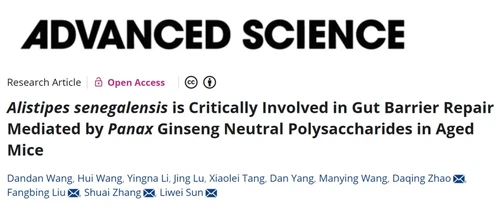
In recent years, scientific research on Ginseng has gained increasing attention. A recent study published in the journal Advanced Science by researchers from Changchun University of Chinese Medicine investigated the effects of Ginseng neutral polysaccharides (GPN) on gut inflammation in aging mice. The study revealed that Alistipes senegalensis played a significant protective role in reducing gut permeability in GPN-treated aged mice. Additionally, it was found to extend the lifespan of Caenorhabditis elegans, possibly through the production of indole and the activation of the aryl hydrocarbon receptor (AhR) pathway.
This groundbreaking research marks the first identification of a functional axis involving Ginseng polysaccharides, Alistipes senegalensis metabolites, and the intestinal barrier-a novel mechanism that may help alleviate age-related gut dysfunction and promote healthy aging.
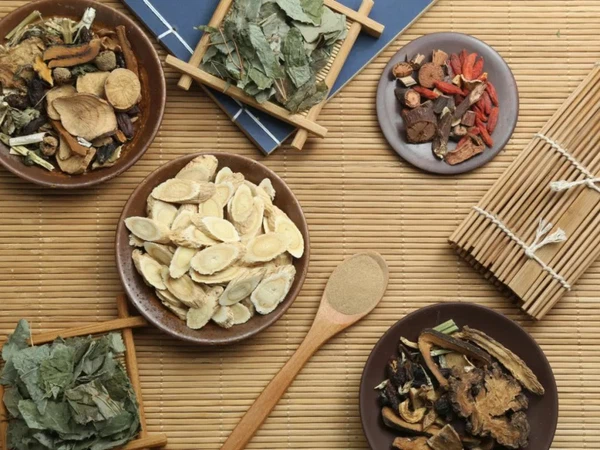
Ginseng
Panax Ginseng is a medicinal plant with thousands of years of history and is one of the most widely used herbs in the world. It is primarily cultivated in northeastern China, though related species are also found across East Asia, Central Asia, and North America. Based on processing methods, ginseng is typically classified into three types: fresh ginseng, white ginseng (sun-dried after peeling), and red ginseng (steamed and dried). Belonging to the Araliaceae family, the genus Panax includes 8 to 13 species, most of which are commonly referred to as Asian or Chinese ginseng.
Phytochemical studies have shown that ginseng's physiological activity is attributed to a wide array of bioactive compounds, including ginsenosides, polysaccharides, peptides, alkaloids, polyacetylenes, and phenolic compounds. Among these, ginsenosides are recognized as the primary active constituents. Based on their aglycone structure, ginsenosides are typically classified into two main types: protopanaxadiols (PPD) and protopanaxatriols (PPT). Key representatives include Rb1 (a PPD-type) and Rg1 and Rg3 (both PPT-type), which are commonly studied for their potent biological activities.
The term "adaptogen" was first introduced by Russian pharmacologists, and ginseng remains one of the most extensively studied adaptogenic herbs. Scientific evidence has shown that adaptogens may possess neuroprotective, immunomodulatory, anti-anxiety, anti-fatigue, and central nervous system-stimulating properties. They are also believed to help regulate hormonal balance and physiological stress responses. The Latin name "Panax" derives from the Greek word meaning "cure-all," reflecting its long-standing reputation as a powerful natural remedy. Numerous in vitro and in vivo studies have highlighted ginseng's potential in addressing a variety of health conditions, including immune-related diseases, neurodegenerative disorders, and issues related to hormonal and metabolic regulation.
If you're looking for a high-quality ginseng extract or exploring adaptogenic ingredients for your next formulation, Natural Field offers reliable bulk solutions backed by years of industry expertise.
Contact us today to learn more about our ginseng raw materials, technical specifications, and custom formulation support.
Panax Ginseng is a well-known adaptogen used for thousands of years in traditional medicine. Modern research confirms its broad health benefits, including immune regulation, inflammation control, antioxidant protection, fatigue reduction, and cognitive improvement. In this article, we'll explore these key adaptogenic effects backed by scientific studies, helping you understand why ginseng is a valuable ingredient for supplements and functional foods.

01
Immune System Support
Ginseng helps balance both innate and adaptive immunity. It activates immune cells like macrophages and increases the production of molecules such as nitric oxide and cytokines (IL-1, IL-6, TNF-α). It also influences antibody levels (IgA, IgG, IgM), supporting the body's defense system - a core adaptogenic action.
02
Anti-Inflammatory Effects
The active ginsenoside Rg2 in ginseng can reduce inflammation in conditions like ulcerative colitis by regulating inflammation pathways (NF-κB/NLRP3). Ginseng extracts also raise anti-inflammatory markers like IL-10 in brain cells and may protect cartilage to slow osteoarthritis progression.
03
Antioxidant and Anti-Aging Properties
Ginsenosides such as Rb1 and Rg1 protect cells from oxidative stress, a major factor in aging. Clinical studies show ginseng lowers harmful reactive oxygen species (ROS) and boosts antioxidant enzymes, enhancing overall antioxidant defenses.
04
Fatigue Relief
Ginseng's Rb1 and Rg3 components have been shown to reduce fatigue in animal models and humans. They improve strength, increase activity levels, and lower fatigue-related biomarkers, making ginseng a trusted ingredient for energy and endurance supplements.
Partner with Natural Field for Premium Ginseng Ingredients
If you want to incorporate scientifically supported ginseng extracts into your products, Natural Field offers high-quality bulk ginseng raw materials with consistent quality and full technical support.Contact us today to request samples, product specifications, and customized formulation assistance.
References
Ginseng Overview - Drugs.com
Comprehensive information on ginseng's uses, pharmacology, and safety.
Wang, D., Wang, H., Li, Y., et al. (2025). Alistipes senegalensis is Critically Involved in Gut Barrier Repair Mediated by Panax Ginseng Neutral Polysaccharides in Aged Mice. Advanced Science, e16427.
https://doi.org/10.1002/advs.202516427
Ratan, Z. A., Youn, S. H., Kwak, Y.-S., et al. (2020). Adaptogenic effects of Panax ginseng on modulation of immune functions. Journal of Ginseng Research, 45(1), 32–40.
https://doi.org/10.1016/j.jgr.2020.01.001
Sutopo, N. C., Qomaladewi, N. P., Lee, H. W., et al. (2025). Comprehensive understanding and underlying molecular mechanisms of the adaptogenic effects of Panax ginseng. Journal of Ginseng Research, 49(4), 356–365.
https://doi.org/10.1016/j.jgr.2025.04.005
Zhang, J., Xie, J., Niu, Z., et al. (2025). Ginsenoside Rg2, a principal effective ingredient of Panax ginseng, attenuates DSS-induced ulcerative colitis through NF-κB/NLRP3 pathway. Journal of Ginseng Research, 49(3), 282–293.
https://doi.org/10.1016/j.jgr.2025.03.003
Kuang, B., Geng, N., Yi, M., et al. (2025). Panaxatriol exerts anti-senescence effects and alleviates osteoarthritis and cartilage repair fibrosis by targeting UFL1. Journal of Advanced Research, 74, 493–511.
https://doi.org/10.1016/j.jare.2025.03.015
Yang, Y., Ren, C., Zhang, Y., Wu, X. (2017). Ginseng: A Nonnegligible Natural Remedy for Healthy Aging. Aging and Disease, 8(6), 708–720.
https://doi.org/10.14336/AD.2017.0417